
How Can Restaurants Overcome Operational Challenges? From Research to Practical Solutions
Published
Research into Bengaluru's Darshini-style restaurants identified workforce management, pricing strategy, seasonal demand, customer experience, operational efficiency and industry changes among the challenges faced by restaurant businesses.
The study surveyed 105 restaurant representatives and found that these challenges were consistently recognized by respondents. The researchers' analysis identified workforce management, pricing strategy, and staying current with industry trends among the major challenges. We looked at the findings themselves in What Are the Biggest Challenges Restaurants Face?
Important: The research study was conducted by C. Udayalakshmi and Dr. J. Sridevi. Chefgaa is using published research as an independent source to understand restaurant problems and discuss practical operational approaches. The study did not test Chefgaa.
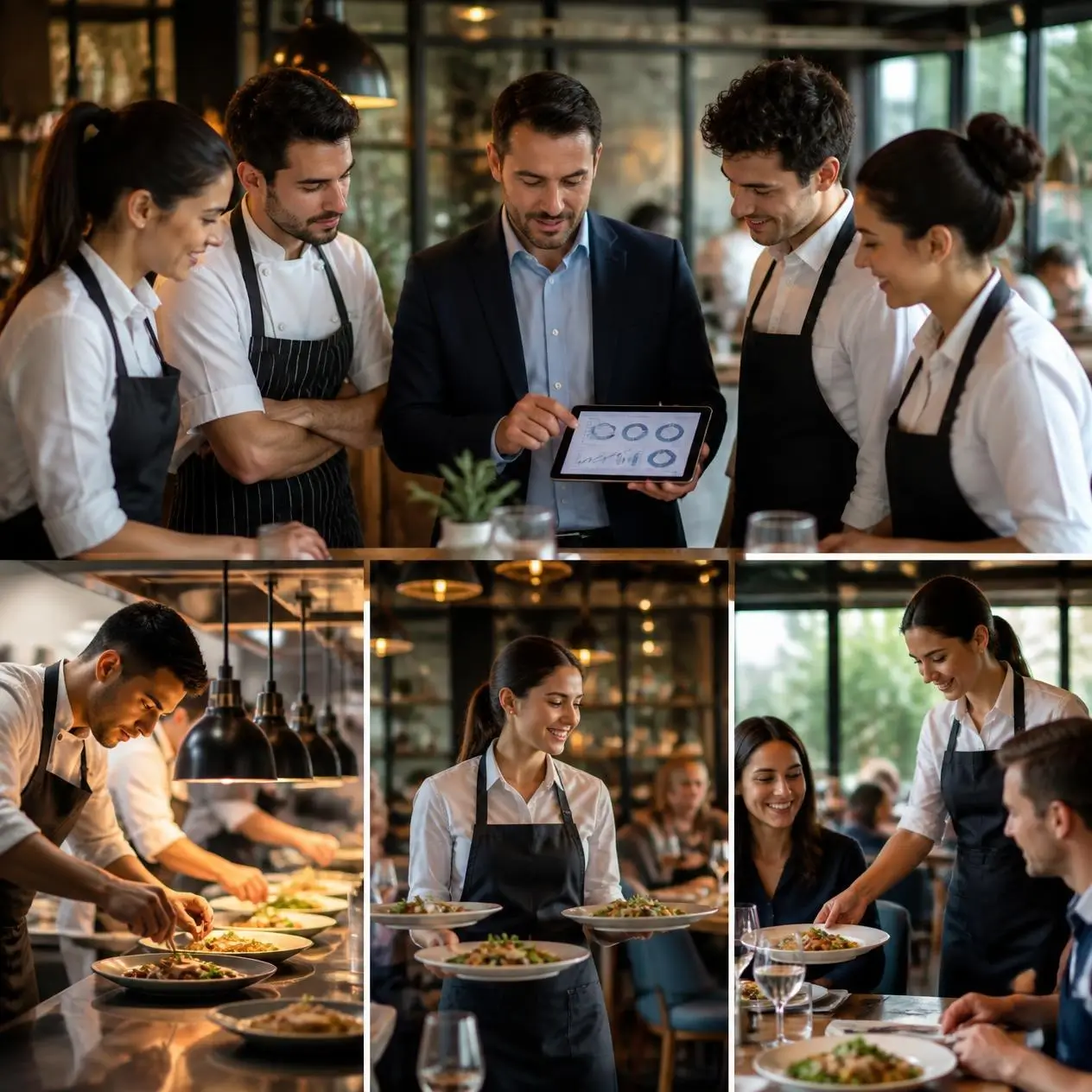
From Restaurant Problems to Operational Responses
Identifying a problem is only the first step. Restaurant operators can then examine their workflows, information, and decision-making processes to determine where better organization or technology may help.
| Challenge | Possible operational response |
|---|---|
| Workforce management | Standardized workflows and role-based systems |
| Pricing | Better cost, purchasing and sales visibility |
| Seasonal demand | Sales data and demand analysis |
| Customer experience | Faster ordering and kitchen coordination |
| Operations | Connected restaurant management |
| Competition | Service consistency and customer retention |
| Quality | Standardized recipes and processes |
| Industry changes | Digital ordering and modern restaurant tools |
1. Managing Workforce More Efficiently
Workforce management was one of the strongest challenges identified in the research. A practical response is to make everyday restaurant processes easier to follow and less dependent on informal communication.
Role-based workflows, digital order taking, clear responsibilities and centralized information can help teams work more consistently, particularly when restaurants experience staff turnover or busy shifts.
2. Using Better Information for Pricing Decisions
The research identified pricing strategies as a major challenge. Restaurants need to balance raw-material costs, labor, overheads, competition, and customer expectations.
A useful operational approach is to connect recipe information, ingredient costs, purchasing data, and sales information. Better visibility can help restaurant operators understand where costs are changing and make more informed pricing decisions.
3. Managing Peak and Slow Demand
Seasonal demand can create very different operational conditions. During busy periods, restaurants may face order and staffing pressure; during slower periods, resources may be underused.
Historical sales information can help operators understand busy periods, slow periods, popular menu items, and purchasing patterns. This information can support staffing, inventory, and promotional planning.
4. Improving Customer Experience Through Operations
Customer experience is closely connected to what happens behind the scenes. Ordering, kitchen preparation, billing, and payment all contribute to the customer's experience.
A connected workflow—from order taking to kitchen communication and billing—can reduce unnecessary handoffs and give staff better visibility into the status of orders.
5. Reducing Operational Bottlenecks
Restaurants can lose time when information is spread across disconnected processes. Manual communication and repeated data entry can make it harder to maintain visibility.
Connecting POS, waiter ordering, kitchen workflows, online ordering, payments and reporting can create a more organized operational flow. The exact technology required depends on the restaurant's size and operating model.
6. Staying Current with Restaurant Technology
The research notes that the food-service sector is changing through technology, online delivery, marketing, and other developments. It also recognizes that smaller restaurants can face resource constraints when adapting.
Restaurants can approach technology incrementally, starting with the operational problems that matter most and adopting tools that simplify rather than complicate daily work.
Where Chefgaa Fits Into the Picture
At Chefgaa, our approach is to connect restaurant operations around practical needs. Depending on the restaurant's requirements, Chefgaa can bring together capabilities such as POS billing, table management, Captain/Waiter App, Kitchen Display System, online ordering, inventory, recipe management, food cost analysis, wastage management, vendor and purchase management, owner dashboards, loyalty and CRM, WhatsApp ordering and multi-location management.
The objective is not simply to add more software. It is to help restaurant teams organize information, reduce manual work and gain better visibility into operations.
A Problem-First Approach to Restaurant Technology
Restaurant technology should start with the operational problem—not with a list of software features.
| Problem | Operational question |
|---|---|
| Staff management | Where can workflows be standardized? |
| Food cost | Can ingredient and recipe costs be tracked more clearly? |
| Slow service | Where does the order-to-kitchen process slow down? |
| Poor visibility | Can owners access centralized reports and dashboards? |
| Changing demand | What do historical sales patterns show? |
The Chefgaa Approach
Problem → Process → Data → Visibility → Better decision-making
This approach keeps technology connected to the actual needs of restaurant operators. Not every restaurant needs every feature. The right solution depends on the restaurant's size, workflow, business model, and operational priorities.