
What Is FoodTech? How It’s Transforming the Restaurant Industry in 2027
Published
Managing a modern-day restaurant goes beyond simply taking orders and delivering the food. Restaurant managers are required to manage everything from billing and online orders, to the kitchen, inventory, payments, customer relations, costs, workflows, and performance of the business, and all of this is done in the effort to provide the customers with a premium experience.
Doing all of that manually becomes increasingly difficult as the restaurant starts growing. That’s when FoodTech comes into play.
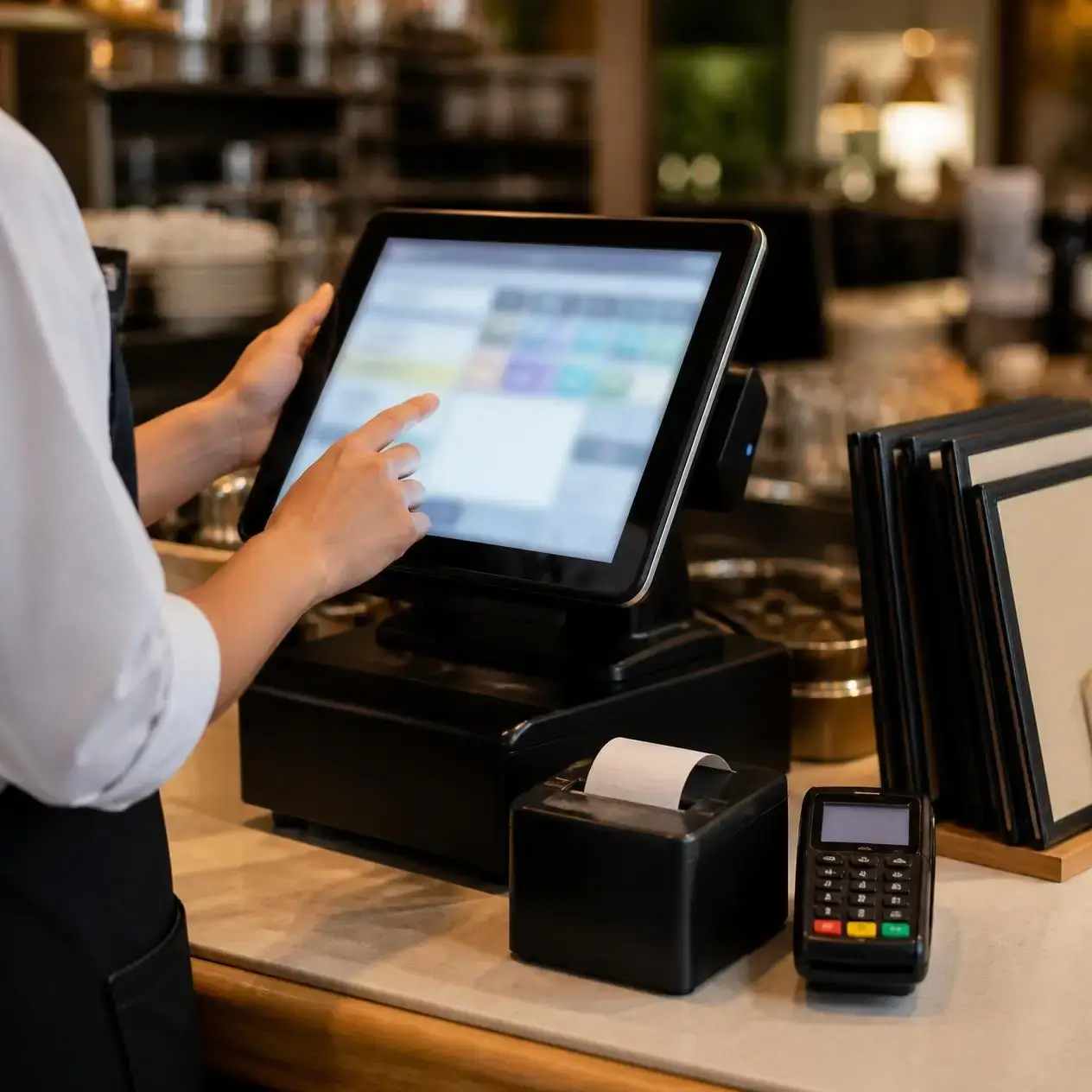
FoodTech, which stands for Food Technology, is the application of technology to improve processes in the entire food industry. In the case of restaurants, that involves such technologies as POS systems, online ordering platforms, Kitchen Display Systems (KDS), inventory management, payments, customer relationship management, analytics, automation, and artificial intelligence.
The end goal, however, is not just to incorporate more technology into the system. The aim is to improve the efficiency of restaurants, eliminate routine work, and make better decisions based on data.
What Does FoodTech Mean for Restaurants?
FoodTech is a general name that can encompass technology throughout the whole food chain – from production and processing to distribution, delivery, hospitality, and restaurants.
In the case of restaurants, FoodTech focuses on technology that optimizes:
Restaurant operations
The customer ordering process
Payments and billing
Kitchen operations
Inventory and procurement
Restaurant cost control
Customer interaction
Analytics, automation and decision-making
A modern restaurant may use multiple technological solutions at once.
Customer order via website/mobile app/QR code → Order received by the restaurant → POS receives the order → KDS transfers the order to the kitchen → Inventory is updated → Payments are processed → Sales data goes to analytics.
The real strength appears only when all these solutions work in one chain rather than as independent systems.
How Does FoodTech Change the Restaurant Industry?
FoodTech changes the way restaurants handle front-of-the-house and back-of-the-house processes.
1. Digital Ordering Changes How People Order Their Meals
The restaurant may provide a customer with various options like online ordering on the restaurant website or app, QR codes, delivery platforms, etc.
Online ordering provides restaurants with full ownership of the ordering process and customer information.
2. POS Systems Are Becoming Restaurant Management Systems
The new age POS technology integrates:
Order management
Billing
Menu management
Table management
Payments
Kitchen management
Inventory
Customer data
Reporting
Integrations
This makes the POS system the focal point of the entire tech stack.
3. Kitchen Display Systems Modernize Kitchen Operations
A Kitchen Display System (KDS) replaces the traditional paper tickets that used to be passed around. Orders are displayed in digital format for the kitchen staff.
Depending on the technology used, a KDS can help restaurants with:
Managing order receipt
Routing orders to the right station
Tracking order status
Reducing mid-shift confusion
Managing back-end efficiency
Making orders visible
4. Inventory Technology Helps Restaurants Manage Stock
Inventory technology can help restaurant managers keep an eye on:
Ingredient stock
Procurement
Vendors
Stock transfers
Low stock alerts
Recipe ingredients
Wastage
Integration of inventory with sales and recipe data gives a detailed insight into ingredient usage.
5. Food Cost Technology Helps Make Restaurant Decisions Data Driven
Restaurant food cost can vary based on the price of ingredients, portion, recipes, wastage, and procurement practices. Technology can help track the ingredient-wise cost and compare it against menu pricing.
If there is any increase in the cost of ingredients for any dish, the restaurant can analyze the cost-effectiveness and take steps accordingly.
7 Key Trends for FoodTech in Restaurants in 2027
FoodTech is moving from single-use software to more connected and data-enabled ecosystems.
- 1. Interconnected Systems for Restaurants
The search for food tech solutions that let multiple operational systems interconnect and communicate is becoming more common among restaurants. The interconnected systems may prevent redundancies and provide consistent insight into operations.
- 2. Ordering Options Online and through QR Codes
Digital ordering is gaining momentum in restaurant technology. Websites, QR codes, ordering interfaces, and other digital means of communication can offer customers convenient ordering channels.
- 3. Restaurant Kitchen Automation
KDS software, order digital routing, automated updates on order status, and kitchen performance reporting may assist restaurant teams in handling busy times better.
- 4. Restaurant Performance Analytics
The data engine can help operators evaluate sales performance, orders, the most popular menu items, unpopular items, operating peak hours, inventory consumption, food cost, customer behavior, and performance by locations.
- 5. AI-powered Restaurant Management
Artificial intelligence can assist in sales forecasting, demand forecasting, menu analysis, customer insights, business reporting, recommendations on operations and data analysis. The value of AI may be in helping operators analyze a lot of information instantly and spot trends.
- 6. Digital Payments
Payments technology becomes a strategic resource when payments are integrated with ordering, POS systems, reporting, and customer data. That way operators can gain more clarity on their revenues and make payments easier for customers.
- 7. Restaurant Customer Engagement Technology
CRM software, loyalty programs, customer databases, digital promotions, and messaging can help restaurants establish strong relationships with customers after the transaction.
Restaurant Performance Analytics
A data engine can help operators evaluate:
Sales performance
Orders
The most popular menu items
Unpopular items
Operating peak hours
Inventory consumption
Food cost
Customer behavior
Performance by location

Why Are Integrated Technologies Important for the Restaurant?
One of the main problems with restaurant technologies is software sprawl. This means that restaurants have one software package for billing, one for online orders, one for inventory, one for payments, one for managing customers, and one for analytics.
If those software packages cannot integrate with each other, employees are forced to manually input data into different platforms. This leads to duplication of effort and makes it difficult for restaurant owners to get an overall idea of how their business is doing.
Order → POS → Kitchen → Payments → Inventory → Customer → Analytics
Integration is not an end in itself; rather, it means building a digital pipeline in the restaurant.
What Criteria Should Restaurants Apply While Evaluating a FoodTech Platform?
To choose a technology tool that fits their needs, restaurants should compare its features against the specific requirements of their operations and not just select the platform with the most options.
- Restaurant POS
Manages orders, payments, transactions, menus, and floor management.
- Online Ordering
Enables online ordering via a restaurant’s own online store.
- Payment Options
The type of payment system which works best for the restaurant and its customers.
- Kitchen Display System
Enables easy order management and synchronization between the restaurant’s front and back end.
- Inventory Management
Monitors ingredients, inventory levels, purchasing, and supply chain.
- Recipe Management
Provides for the standardization of recipes in accordance with ingredient usage and cost per dish.
- Food Cost Management
Monitors ingredient cost and manages menu margins.
- Reporting
Provides analysis of sales, operations, customers, and business performance.
- Integration
Designed for compatibility with other services and tools used in business operations.
- Mobility
Allows monitoring of the restaurant’s vital statistics on the go.
- Scalability
Designed for deployment in multiple locations.
Chefgaa as an Integrated FoodTech Platform
Chefgaa is a restaurant technology solution created to integrate multiple areas of restaurant operations.
Its set of modules includes:
POS
Online Ordering
Payments
Kitchen Display System
Captain/Waiter App
Inventory Management
Recipe Management
Food Cost Management
Wastage Management
Owner Dashboard
Restaurant Analytics
Loyalty and CRM
Integrations with other restaurant solutions
The general idea is to unite different operational functions instead of treating every function of a restaurant separately.
Ordering → POS → Kitchen → Inventory → Payments → Customer Data → Analytics
In the current situation, this approach is important for restaurants looking to minimize operational friction and make use of the operational data they already have.
The Future of FoodTech
The next step in the field of FoodTech is expected to be related to increasingly interconnected and predictive restaurant operations. The concept of considering ordering, payments, kitchen operations, inventory, customers, and analytics as independent units is gradually being replaced by technologies that allow for integration of these functions.
AI and analytics may become the key intelligence layer of the restaurant, enabling the decoding of operational data.
Ordering + Payments + Kitchen + Inventory + Customers + Analytics + AI
FoodTech encompasses all technological applications in the food industry. With respect to a restaurant environment, it entails billing, digital payment systems, analytics, and automation, among others.
Some innovations in restaurant settings include the latest Restaurant POS setups, contactless QR code systems, and intelligent Kitchen Display Systems platforms. It can also be found in digital payment solutions, back-of-house solutions, AI systems, among others.
FoodTech can assist the restaurant in achieving the digitization of processes, increasing business visibility, and full control of margins. These factors help owners provide better dining experiences for customers and make high conviction data-driven decisions.
Yes, it is one of the key pillars of restaurant FoodTech.
FoodTech is a blanket term for technological solutions across the whole supply chain of food. On the other hand, Restaurant Tech is a particular subset of technology solely aimed at the enhancement of operations and guest experience.
AI is optimizing operations through prediction of demand, analysis of each dish's profitability, creation of automated reports, and optimization of predictive buying of inventory.
The software has to fit the particular operator workflow and be user-friendly for employees. Search for solutions compatible with the ecosystem, scalable to multiple units and supported by reliable customer support. It needs to ensure proper security of customer and employee data. Lastly, it has to unite Online Ordering channels of the front of house and Inventory Management and Food Cost Management of the back of house.
Conclusion
The world of restaurants is witnessing an evolution like never before, and the driving force behind it is FoodTech. Technology is entering every part of the restaurant business, including POS systems, online orders, digital payments, KDS, inventory management, food cost technology, CRM, analytics, automation, and artificial intelligence.
Restaurant owners have changed their mindset from “Do I need technology?” to “How can I leverage technology in the most strategic manner possible to help my restaurant operate at its optimal level?”
With the restaurant business getting more complicated and competitive than ever, integrated technology can play an integral role in eliminating manual work and gaining control over operations and margins.